
Cooling Mattress Guide 2026: Sleep Cooler Tonight
You have cranked the AC down to 65 degrees. A tower fan oscillates at the foot of the bed. You bought the cooling sheets, the moisture-wicking pajamas, the whole setup. And still, at 3 a.m., you wake up with your skin radiating heat, pillow flipped to the cold side for the fourth time, sheets kicked into a damp heap. If this sounds familiar, you are not alone, and you are not imagining the problem. Overheating is one of the most common and stubborn disruptors of deep, restorative sleep. The good news for any hot sleeper is that 2026 brings more legitimate cooling mattress options than ever before, along with a clearer understanding of which technologies actually deliver on their promises. This guide walks through the science of sleep temperature, explains how a temperature regulating mattress works at the material level, addresses the skepticism many shoppers feel, and helps you decide whether a cooling mattress or an active cooling system makes more sense for your bedroom. Performance Sleep Systems offers a curated range of cooling mattresses for US sleepers who are done compromising on comfort.
Table of Contents
- Why Temperature Matters for Sleep Quality
- How Cooling Mattress Technology Actually Works
- Do Cooling Mattresses Really Work? The Skeptic's Section
- Cooling Mattress vs. Cooling System: Which Should You Buy in 2026?
- What to Look for in a Cooling Mattress: 2026 Buying Guide
- Performance Sleep Systems: Cooling Mattresses Built for Real Sleepers
- Frequently Asked Questions
- Conclusion
Why Temperature Matters for Sleep Quality
Sleep and body temperature are locked in a biological rhythm that most people never think about until something goes wrong. To fall asleep and stay asleep, your core body temperature needs to drop by roughly one to two degrees Fahrenheit. This is not a preference. It is a physiological requirement driven by the circadian clock, which signals blood vessels near the skin to dilate and release heat as bedtime approaches. When skin temperature stays elevated, sleep onset is delayed. Even after you drift off, an overheated body struggles to maintain the deeper stages of non-REM sleep, and REM sleep in particular is sensitive to ambient temperature disruptions. The result is more frequent wake-ups, lighter sleep overall, and that groggy, unrested feeling the next morning.

The term "hot sleeper" covers a wide range of people, and the causes are not always obvious. Menopause and perimenopause are major drivers, as hormonal shifts directly affect the hypothalamus, the brain's thermostat. Athletes and highly active individuals often carry residual muscle heat into the night after evening workouts. Higher body mass can also contribute to heat retention. Certain medications, including some antidepressants and blood pressure drugs, list night sweats as a side effect. It is worth noting that a cooling mattress can mitigate these issues but cannot cure an underlying medical condition. If night sweats are persistent and severe, a conversation with a doctor is the right first step. For everyone else, the mattress you sleep on is either part of the problem or part of the solution.
How Cooling Mattress Technology Actually Works
The phrase "cooling mattress" gets thrown around so loosely in marketing that it is easy to assume it is all hype. In reality, there are distinct technologies at work, and they operate on different principles. Understanding the differences is the key to matching a mattress to your actual sleep needs.
Phase-Change Materials (PCMs)
Phase-change materials are the quiet workhorses of modern temperature regulation. Originally developed for NASA to protect astronauts from extreme temperature swings, PCMs absorb excess body heat when you are too warm, store it, and then release it back when your skin temperature drops. In a mattress, microencapsulated PCMs are embedded directly into the foam or woven into the cover fabric. The entire process is passive. No cords, no pumps, no apps. For sleepers who want consistent, all-night temperature neutrality without adding another device to the bedroom, a PCM-equipped cooling mattress is the most elegant solution available in 2026.
Gel-Infused Memory Foam and Open-Cell Structures
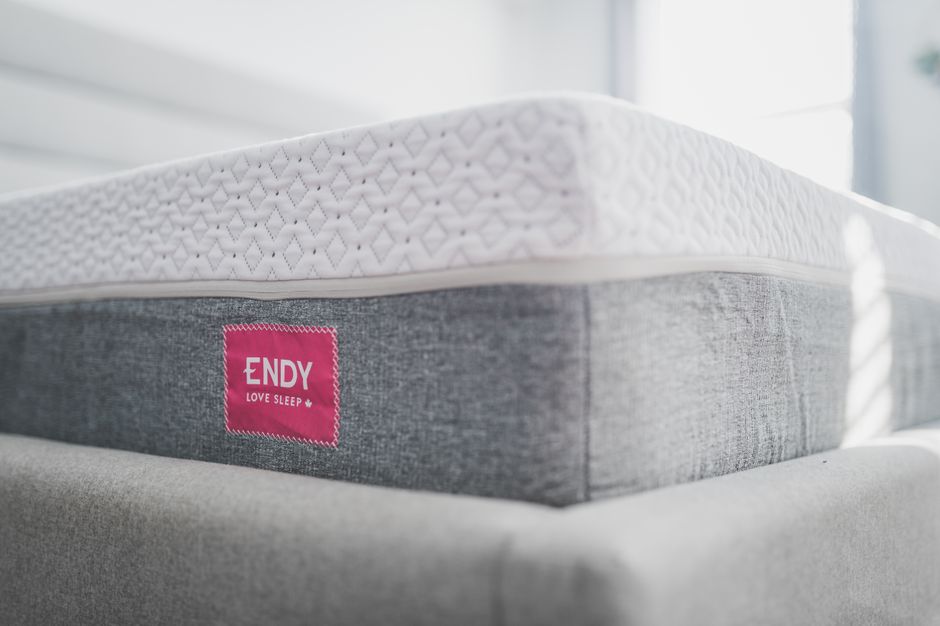
Memory foam earned a reputation for sleeping hot in its early generations, and that reputation was earned honestly. Dense, closed-cell foam traps body heat with nowhere for it to go. Gel-infused foam was the industry's first major response. Tiny gel beads or liquid gel swirls are mixed into the foam during manufacturing, designed to draw heat away from the body through conduction. Open-cell foam structures take a different approach, creating internal pathways that allow air to move through the material rather than stagnating. Purple's GelFlex Grid takes this concept furthest, with over 1,400 open air channels that the company claims sleep four times cooler than traditional foam. The physics checks out: more air movement means more convective heat transfer away from the body. The caveat is that gel-infused foam still retains some heat. It is an improvement, not a miracle, and it works best when paired with a breathable cover and a hybrid coil support layer that allows air to circulate underneath.
Active Cooling Systems (Water and Air)
Active cooling represents a completely different category. These are not mattresses at all, but systems that add adjustable temperature control to whatever mattress you already own. Water-powered systems like the Eight Sleep Pod 5 and the ChiliPad circulate temperature-controlled water through a thin pad placed on top of the mattress. The Eight Sleep Pod 5 uses clinical-grade sensors and AI to adjust temperatures dynamically throughout the night, while the ChiliPad offers dual-zone control for couples. Air-powered systems like the BedJet 3 take a simpler approach, blowing air across the bed surface at temperatures ranging from 66 to 109 degrees Fahrenheit. These are the only solutions on the market that qualify as a true temperature regulating mattress system with active, user-controlled cooling. They also come with trade-offs: bedside units, hoses, power cords, and ongoing electricity use.
Do Cooling Mattresses Really Work? The Skeptic's Section
This is the question that sits at the top of many Google searches with an empty answer box beneath it, and it deserves a direct response. Yes, cooling mattresses work, but the effectiveness varies dramatically depending on the technology, the sleeper, and the environment. The larger problem is that almost no manufacturer publishes standardized test data to back up their claims. You will not find ASTM thermoregulation testing protocols or clinical sleep lab results on most product pages. What you get instead are proprietary lab tests with conditions that may not resemble your bedroom. A mattress that tests four degrees cooler in a climate-controlled chamber might perform very differently in a humid Florida summer with no air conditioning.
Durability is another question that gets too little attention. Phase-change materials and gel infusions are not permanent. Over a typical mattress lifespan of seven to ten years, PCM microcapsules can degrade, and gel beads can lose their thermal conductivity. Foam itself breaks down over time, becoming softer and less supportive, which reduces the open-cell airflow that made it feel cool in the first place. A mattress that sleeps comfortably cool in year one may feel noticeably warmer by year five. This is not a reason to avoid cooling mattresses, but it is a reason to set realistic expectations and to pay attention to warranty terms and material density specs.
Real-world experiences tell a mixed story. On forums like Reddit, some hot sleepers report that switching to a hybrid cooling mattress solved their night sweat problem entirely. Others, like the user who described sleeping with AC at 65 degrees, a fan, and cooling sheets and still overheating, find that even a premium mattress barely moves the needle. A $6,599 Tempur-Pedic LuxeBreeze may not outperform a $1,000 BedJet paired with a basic breathable mattress. The honest verdict is that cooling mattresses are most effective for mild to moderate overheating. For severe cases where you regularly wake up drenched, active cooling systems offer a level of temperature control that passive materials simply cannot match.
Cooling Mattress vs. Cooling System: Which Should You Buy in 2026?
The decision between a cooling mattress and an active cooling system comes down to three factors: the severity of your overheating, your budget, and your tolerance for bedroom technology. A cooling mattress is a single purchase that replaces your current bed and requires no ongoing maintenance beyond normal use. Price ranges are wide. Value-tier options under $500 exist, though cooling performance at that price point is modest at best. The sweet spot for quality PCM and hybrid cooling technology sits between $1,000 and $2,500. Luxury models from Tempur-Pedic, Stearns and Foster, and Beautyrest push past $2,500 and can exceed $6,500, where material quality is excellent but the law of diminishing returns applies.
Active cooling systems invert the value proposition. A $1,000 BedJet can turn almost any mattress into a cooled surface, and a ChiliPad with dual-zone control solves the common problem of partners who disagree on sleep temperature. The downside is the setup. These systems require a bedside unit, hoses, and access to power, and they add a low hum of mechanical noise to the bedroom. For couples, dual-zone active cooling is often the only solution that keeps both people happy without compromise. For a single sleeper with mild heat issues, a well-chosen cooling mattress is simpler and more elegant.
Climate also matters. In humid regions like the Southeast, moisture-wicking is just as important as heat transfer. A mattress that cools through conduction but traps humidity will still feel clammy. In dry climates, PCMs and gel infusions perform better because evaporative cooling is more effective when the air is not already saturated. And a hard truth: if your home lacks air conditioning entirely, no mattress will overcome a 90-degree bedroom. Address the room temperature first, then optimize the sleep surface.
What to Look for in a Cooling Mattress: 2026 Buying Guide
Material Composition
Hybrid construction should be your default starting point. A combination of foam comfort layers and a pocketed coil support core creates natural airflow channels that all-foam mattresses lack, regardless of how much cooling gel is advertised. Pay attention to the cover material as well. Natural fibers like cotton, wool, and linen wick moisture away from the skin far more effectively than synthetic polyester covers. This is where the contrarian stance taken by brands like Charles P. Rogers has merit: a foam-free mattress built with breathable natural materials can sleep cooler than a foam mattress loaded with cooling gimmicks. The ideal cooling mattress in 2026 combines a PCM-infused or gel-infused hybrid core with a natural fiber cover, giving you both active heat dissipation and passive moisture management.
Climate and Home Environment
Your local climate should influence your choice more than most buying guides acknowledge. In humid states, prioritize airflow and moisture-wicking over conductive cooling alone. A mattress with a highly breathable coil layer and a cotton or Tencel cover will outperform a dense foam mattress with gel infusions in muggy conditions. In dry, arid climates, PCMs and copper or graphite infusions perform better because the dry air helps dissipate the heat they pull from your body. If you live in a region with distinct seasons, look for a mattress that performs well in both summer humidity and winter dryness, or consider pairing a moderate cooling mattress with seasonal bedding adjustments.
Budget Realities
The market in 2026 segments clearly by price. Under $500, you will find entry-level cooling mattresses, and Mattress Firm alone lists 16 value options. These typically use basic gel-infused foam and simpler covers. They will feel cooler than a non-cooling budget mattress, but do not expect transformative results. Between $1,000 and $2,500, you enter the territory where PCM technology, high-density hybrid construction, and quality natural fiber covers become standard. This is where most hot sleepers will find the best balance of performance and value. Above $2,500, you are paying for premium materials, brand reputation, and incremental improvements in cooling and durability. The Tempur-Pedic LuxeBreeze, Stearns and Foster Lux Estate, and Beautyrest Black lines all occupy this tier. They are excellent mattresses, but a $1,500 hybrid with a BedJet may deliver better cooling for less total cost.
Performance Sleep Systems: Cooling Mattresses Built for Real Sleepers
Performance Sleep Systems understands that hot sleepers have been burned before, sometimes literally, by overhyped cooling claims. The company's approach is built on transparency: real material specs, honest explanations of what each technology can and cannot do, and a curated selection that spans multiple price points and comfort preferences. Whether you need a temperature regulating mattress with PCM-infused hybrid construction or a luxury model with advanced moisture-wicking covers, the collection is designed to match US sleepers with the right solution for their climate, budget, and sleep style. Every mattress comes with trial periods and warranty coverage that give skeptical hot sleepers the confidence to test the claims in their own bedroom. Browse the full cooling collection at Performance Sleep Systems and find a mattress that lets you stop fighting your own body heat every night.
Frequently Asked Questions
What is the best cooling mattress for hot sleepers?
There is no single best mattress for every hot sleeper. The right choice depends on your sleep position, budget, and how severely you overheat. In 2026, hybrid constructions with PCM-infused comfort layers and breathable natural fiber covers represent the standard for balanced cooling performance across most sleeper profiles.
Do cooling mattresses really cool?
Yes, but with important caveats. Passive cooling technologies like PCMs and gel infusions reduce heat retention and promote airflow, which helps most mild to moderate hot sleepers. They do not actively lower the temperature of the bed below the ambient room temperature. For severe overheating, active systems like the BedJet or Eight Sleep Pod provide measurable, adjustable cooling that passive materials cannot replicate.
How do I cool my bed for hot sleepers without buying a new mattress?
Start with the lowest-cost interventions. Switch to breathable cotton, linen, or bamboo sheets. Add a tower fan directed at the bed. Lower your thermostat a few degrees in the hour before bedtime. If those steps are not enough, an air-powered system like the BedJet can cool your existing mattress without requiring a full replacement. Cooling mattress pads with PCM layers offer a middle ground between new sheets and a new mattress.
What is a cooling mattress with temperature control?
The phrase typically refers to active cooling systems rather than mattresses themselves. Products like the Eight Sleep Pod and the BedJet allow users to set a specific bed temperature, often through a smartphone app, and the system actively heats or cools to maintain that setting throughout the night. These are the only solutions that offer true, user-controlled temperature regulation on a sleep surface.
Conclusion
Temperature regulation is not a luxury feature. It is a biological prerequisite for the deep, uninterrupted sleep your body needs to recover, consolidate memory, and regulate mood. Cooling mattress technology has advanced enough by 2026 that hot sleepers have legitimate, effective options at nearly every price point, but the category still requires a discerning eye. Passive cooling through PCMs, gel infusions, and hybrid construction works well for mild to moderate overheating. Active cooling systems deliver more dramatic results for severe cases and for couples who cannot agree on a single sleep temperature. The best approach is to assess your own overheating severity honestly, factor in your local climate, and choose a solution that fits your budget without overpaying for marketing claims. Explore the cooling mattress collection at Performance Sleep Systems and take the first night of your cooler, deeper sleep future.