
Do Ants Sleep? The Science of Colony Rest Cycles
If you have ever watched an ant colony bustling with activity at high speed, you might have wondered whether those tiny creatures ever stop moving. The question “do ants sleep” is more common than you might think, and it often comes with a piece of playground folklore claiming that ants never rest at all. The truth is far more interesting. Yes, ants do sleep, but not in the way humans do. Their rest is a masterclass in efficiency, broken into hundreds of tiny naps spread across a 24-hour cycle. Understanding how these miniature powerhouses manage their downtime offers a surprising mirror for our own lives. If an insect weighing just a few milligrams requires strategic rest to survive and perform, it raises a powerful question for any hardworking person: are you giving your body the high-performance sleep it needs to truly thrive?
Table of Contents
- The Short Answer: Yes, Ants Sleep—But Not Like You Do
- Worker Ants vs. Queen Ants: A Tale of Two Sleep Schedules
- Where and How Do Ants Sleep? The Hidden Behavior of Rest
- Diapause vs. Sleep: The Winter Survival Strategy
- What Ant Sleep Can Teach Hardworking People About Rest
- Frequently Asked Questions About Ant Sleep
- Conclusion: Rest Is Not a Luxury—It’s a Performance Strategy
The Short Answer: Yes, Ants Sleep—But Not Like You Do
The definitive answer to “do ants sleep” is a firm yes, but the mechanics are entirely alien to human experience. While humans are monophasic sleepers, ideally consolidating rest into a single long block at night, ants are polyphasic sleepers. Their rest is shattered into many short episodes distributed throughout both day and night.

The landmark research on this subject comes from a 2009 study by Cassill and colleagues at the University of South Florida, which focused on fire ants. The study quantified the astonishing sleep schedule of worker ants. Rather than lying down for a long night of rest, worker ants take approximately 250 micro-naps every single day. Each of these naps lasts just over one minute. When you add up those brief moments of stillness, the total comes to roughly 4 hours and 48 minutes of sleep within a 24-hour period. That is significantly less than the seven to nine hours recommended for human adults. This fragmented schedule is not a sign of sleep deprivation; it is a highly evolved survival strategy that keeps the colony running like a well-oiled machine.
Worker Ants vs. Queen Ants: A Tale of Two Sleep Schedules
The sleep habits within a single ant colony are not uniform. A stark division exists between the laborers and the royalty, with each schedule perfectly tailored to the demands of the role.
The Worker’s Power-Nap Strategy
Worker ants are the engine of the colony, handling foraging, nest building, and brood care. Their sleep pattern reflects the relentless demands of these jobs. With 250 micro-naps averaging just over a minute each, a worker cobbles together less than five hours of total rest. The genius of this system lies in its staggering. At any given moment, approximately 80 percent of the worker force is awake and active. This ensures that the colony is never left undefended and that work never grinds to a halt.
Earlier observations support this model of cyclical rest. A 1983 study by James and Cottell found that ants exhibit a resting period cycle of about eight minutes within any 12-hour window. During these deep rest phases, physical activity drops dramatically. Antennae and mandible movements can decrease by up to 65 percent, signaling a genuine state of sleep rather than simple inactivity. The colony essentially operates a 24/7 shift system, with individual workers clocking out for a minute at a time before rejoining the workforce.
The Queen’s Luxury Sleep (Relatively Speaking)
If the worker’s life is a sprint, the queen’s is a marathon supported by far more generous rest stops. A queen ant sleeps about 90 times per day, but her naps are significantly longer, lasting roughly six minutes each. This adds up to over nine hours of total sleep daily, nearly double the amount a worker gets. Her role demands it. The queen is the sole reproductive engine of the colony, laying thousands of eggs, and that biological output requires substantial recovery time.
Research has even suggested that queen ants may experience something akin to REM sleep. During their deepest rest phases, queens have been observed twitching their antennae, a behavior that hints at a dream-like state. This level of deep rest is not shared by all members of the colony. A curious anomaly reported by The Guardian in 2011 noted that soldier ants, unlike workers, actually show a spike in brain activity during their deep resting phases. This counterintuitive finding suggests that even in rest, a soldier’s brain remains on high alert, ready to respond to threats at a moment’s notice.
Where and How Do Ants Sleep? The Hidden Behavior of Rest
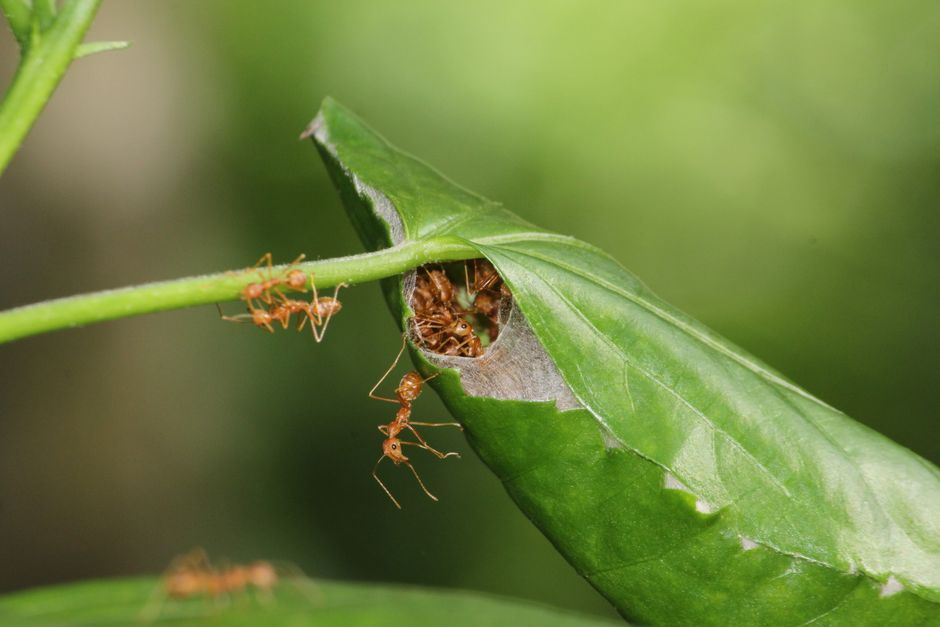
Observing an ant in its deepest sleep requires looking inside the nest, where behavior takes a surprising turn. Ants do not simply collapse on the ground. They prefer to sleep on the ceilings and walls of their underground chambers. This positioning helps them avoid the high-traffic floor areas where other ants are constantly moving, minimizing disturbance. They grip the surface with their legs, maintaining just enough muscle tone to stay attached without expending conscious effort.
The staggered nap schedule creates a factory-like environment where the workforce never fully powers down. While some ants rest on the ceiling, others are actively moving below. This system varies by species and time of day. Fire ants are generally diurnal, active during daylight hours, while species like carpenter ants, crazy ants, and ghost ants are nocturnal, conducting their foraging under the cover of darkness. This variation dispels the myth that ants simply sleep standing up or that all ants disappear at night. The colony is a living, breathing entity that shifts its active personnel based on a complex internal clock, though science still has gaps to fill regarding how larval and pupal ants rest during development.
Diapause vs. Sleep: The Winter Survival Strategy
It is important to distinguish between the daily micro-naps of ants and a completely different biological state called diapause. While sleep is a daily, easily reversible condition, diapause is a seasonal survival strategy triggered by environmental cues. As days shorten and temperatures drop in autumn, ants prepare for winter by entering a state of dormancy. Their metabolic rate plummets, they stop foraging, and they cluster together deep within the nest, moving slowly and living off stored energy reserves.
Diapause is not true hibernation, even though it looks similar. The ants are not in a deep sleep from which they cannot wake; they are in a state of suspended animation, and they can still be roused if conditions change. This is a long-term adaptation to resource scarcity, not a nightly reset. While humans do not experience diapause, the seasonal shift does affect us. Many people notice their sleep quality declines in winter due to reduced light exposure, a milder echo of the environmental triggers that send ants into their winter retreat. It is a reminder that all living things, from insects to humans, are deeply connected to the cycles of light and temperature.
What Ant Sleep Can Teach Hardworking People About Rest
The sleep habits of ants hold a clear lesson for anyone pushing themselves to the limit. Ants do not succeed despite their rest; they succeed because of it. The colony’s 80/20 rule, keeping most workers active while a minority rests, ensures that the entire system never collapses from exhaustion. For a hardworking person, this translates directly to the importance of prioritizing deep, restorative sleep at night. You cannot simply adopt a polyphasic ant schedule of one-minute naps and expect to function. Human biology requires consolidated sleep cycles to clear metabolic waste from the brain, consolidate memory, and repair tissue.
This is where the concept of sleep performance becomes critical. Ants optimize their environment for rest by choosing undisturbed locations. They instinctively know that the quality of their micro-nap depends on the safety of their surroundings. For humans, the environment is just as crucial. Your bedroom is your chamber, and your mattress is the surface you cling to for a third of your life. If a tiny ant requires a safe, undisturbed ceiling to rest, imagine what a high-quality mattress and sleep system can do for you. Building your own colony of peak performance starts with recognizing that strategic rest is not a sign of weakness. It is the foundation of every achievement that follows.
Frequently Asked Questions About Ant Sleep
Do ants sleep at night?
The answer depends entirely on the species. Diurnal ants, like fire ants, do the majority of their sleeping at night. Nocturnal ants, such as carpenter ants, sleep during the day. Regardless of the species, the colony never fully sleeps at once. A rotating shift of workers is always awake, ensuring constant vigilance.
How long do ants sleep in total?
Worker ants accumulate approximately 4.8 hours of sleep per day through hundreds of micro-naps. Queen ants enjoy a far more luxurious schedule, sleeping for over nine hours total each day. These figures can vary based on environmental conditions and the specific needs of the colony.
Do ants sleep on their back?
No, ants do not typically sleep on their backs. They prefer to sleep on chamber ceilings or walls, gripping the surface with their legs. Finding an ant on its back is usually a sign of death or distress, not a sleeping position.
Can you use ant sleep cycles for pest control?
While it is an interesting theory, practical pest control does not generally target specific sleep cycles. Most professionals recommend treating nests when ants are active and foraging, as this is when they are most likely to carry bait back to the colony. Since a large percentage of the colony is always awake, there is rarely a moment when the entire nest is asleep and vulnerable.
Conclusion: Rest Is Not a Luxury—It’s a Performance Strategy
Ants prove that even the most relentlessly hardworking organisms on the planet require strategic rest to function. Their entire society is built around a rhythm of activity and recovery, ensuring that no single worker burns out. The lesson for humans is clear: you cannot run on micro-naps and determination alone. Your body requires a dedicated, high-quality sleep environment to perform at its peak.
At Performance Sleep Systems, we understand that your rest is the foundation of your productivity. Just as the queen ant gets the deepest rest for her critical role, you deserve a sleep system that supports your most important work. Discover your ideal sleep performance solution at Performance Sleep Systems.