

Sleep Training 1 Year Olds: A Complete Guide for Healthy Habits
If you are reading this at 3 AM with a one-year-old who refuses to sleep anywhere but on your chest, you are not alone. Sleep training 1 year olds is a topic that fills parenting forums, late-night text threads, and pediatrician offices with equal parts desperation and hope. The truth is that this age brings a perfect storm of developmental leaps, separation anxiety, and nap transitions that can turn even a previously good sleeper into a nightly negotiation. But here is what the exhausted parent brain needs to hear: it is not too late. In fact, this moment, right now in 2026, is an ideal window to teach your child the skill of independent sleep, a skill that will serve them for decades to come.
Table of Contents
- Why Sleep Training at 12 Months Is Different (and Why It Matters for Life)
- The 4-Step Foundation: Preparing Your 1-Year-Old for Success
- The Top 3 Sleep Training Methods for a 1-Year-Old
- Troubleshooting: Why Your 1-Year-Old Is Fighting Sleep (And What to Do)
- The Long Game: How Sleep Training Now Builds a Healthy Adult
- Conclusion
This guide is not about quick fixes or magical 40-second solutions. It is a practical, science-backed roadmap for understanding why your one-year-old fights sleep, how to choose a method that fits your family, and why the effort you invest now is a direct deposit into your child’s lifelong health. We will cover the unique challenges of this age, the four steps that must come before any formal training, the top methods with realistic timelines, and the troubleshooting you will need when teething or separation anxiety derails your progress.
Why Sleep Training at 12 Months Is Different (and Why It Matters for Life)
A one-year-old is not simply a larger six-month-old. The developmental landscape has shifted dramatically, and any sleep training approach must account for these changes. By 12 months, most children have developed true object permanence. They know you exist when you leave the room, and they have the cognitive horsepower to protest that departure with intention. Add in the physical milestone of pulling to stand, cruising along furniture, or even taking first steps, and you have a child who can physically escalate their protest in ways a stationary infant cannot.
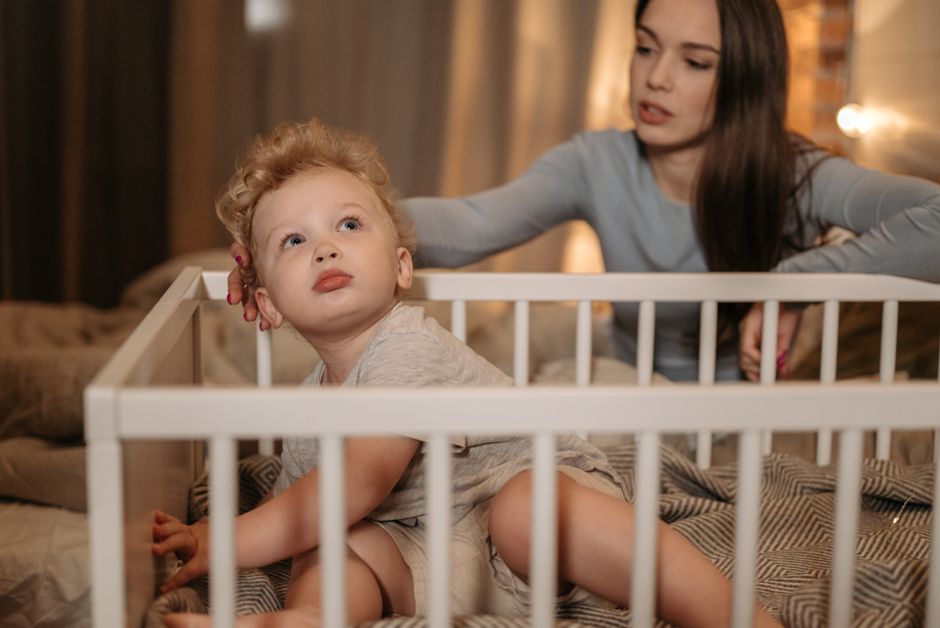
Separation anxiety also peaks around this age, a phenomenon often called the “Velcro phase.” Your child’s cries at bedtime are not purely manipulative; they are rooted in a genuine developmental fear of separation. This means methods that worked at eight months may need adjustment. A one-year-old needs a slower, more reassuring approach that acknowledges their emotional reality while still holding the boundary that sleep is non-negotiable.
Beyond the immediate crisis, there is a compelling long-term reason to prioritize sleep training now. Researchers studying sleep architecture have found that the patterns established in toddlerhood lay the groundwork for circadian rhythm stability in adulthood. When a child learns to fall asleep independently and cycle through sleep stages without external props, their brain is essentially wiring itself for self-regulation. This is not just about getting through the night; it is about building the neurological infrastructure for healthy sleep across a lifetime. The 12-month mark sits in a sweet spot, after the four-month sleep regression has matured the sleep cycle and before the 18-month sleep regression and eventual toddler bed transition complicate the picture further.
And to answer the question that brought many parents here: no, it is absolutely not too late to sleep train a one-year-old. Your child is ready. They are capable of learning this skill, and you are capable of teaching it. The window has not closed; it has simply changed shape.
The 4-Step Foundation: Preparing Your 1-Year-Old for Success
Before you choose a sleep training method, you must lay the groundwork. Skipping these steps is the most common reason training fails, and it is almost always fixable.
Step 1: Optimize the Sleep Environment (The “Cave” Principle)
A one-year-old’s brain is buzzing with new inputs, words, faces, sounds, and the beginnings of imagination. The sleep environment must counterbalance that stimulation. Think of the ideal nursery as a cave: dark, cool, and quiet. Blackout curtains that eliminate even the sliver of light from a hallway are non-negotiable. A white noise machine set to a consistent, non-looping sound at roughly 65 decibels can mask household noise and create an auditory cue for sleep.
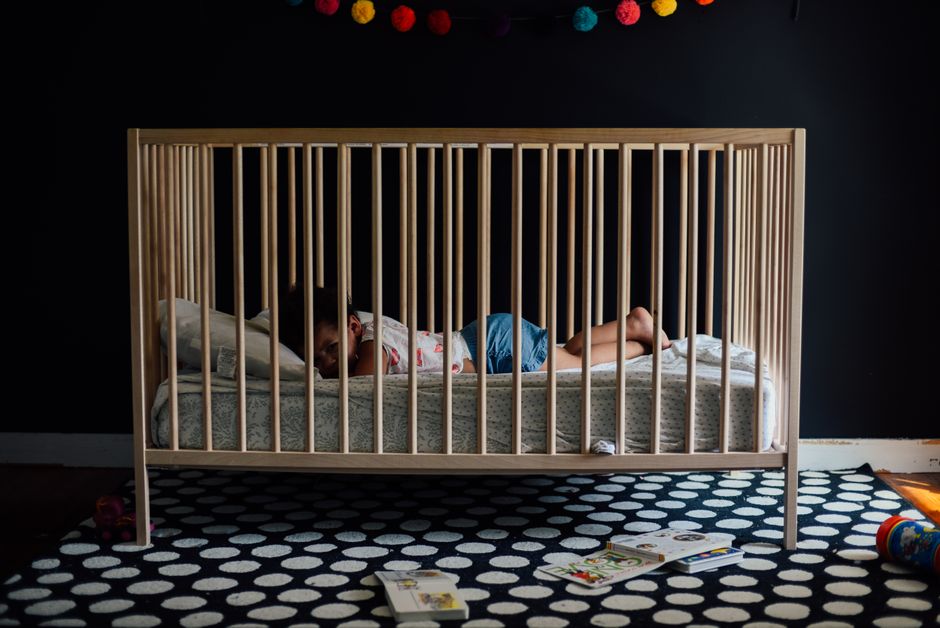
The crib itself should be a safe haven, not a playground. As of early 2026, pediatric safety guidelines continue to recommend a firm mattress with a fitted sheet and nothing else: no bumpers, pillows, blankets, or stuffed animals for children under 18 months. For a mobile toddler who can pull up, ensure the crib mattress is at its lowest setting. The room temperature should stay between 68 and 72 degrees Fahrenheit, and a cool-mist humidifier can help if the air is dry, promoting easier breathing and deeper sleep.
Step 2: Master the Nap Transition (2-to-1 Nap Shift)

The single biggest disruptor of night sleep at this age is the transition from two naps to one. This shift typically occurs between 12 and 18 months, and it rarely happens overnight. The process can take weeks, during which an overtired child will fight bedtime, wake more often at night, and start the day before sunrise.
Signs that your child is ready to drop the morning nap include consistently fighting the second nap, taking longer than 20 minutes to fall asleep for the afternoon nap, or waking for the day at 5 AM despite adequate total sleep. The most effective strategy is the “bridge nap,” a short, 15- to 20-minute catnap, often on the go in a car or stroller, that takes the edge off without fully resetting the sleep drive. This bridge nap protects bedtime by preventing overtiredness while you gradually push the main midday nap later, aiming for a start time around 12:30 PM. Once the bridge nap is no longer needed, you will have a child on one solid, restorative nap, and night sleep will stabilize.
Step 3: Build a Predictable, Calming Bedtime Routine
A bedtime routine is not a luxury; it is a biological signal. The sequence of events tells your child’s brain to begin producing melatonin. The routine should last about 20 to 30 minutes and follow the same order every night. A classic, effective sequence is bath, book, feeding, and bed, with the critical detail that the feeding ends with the child still awake.
Equally important is what happens in the five minutes before lights out. This is “connection time,” a period of focused, quiet attention where you hold your child, sing softly, or simply sit together in the dark. This fills their emotional tank and directly addresses the separation anxiety that fuels bedtime protests. When you lay them down drowsy but awake, they are calm, connected, and ready to practice the skill of falling asleep on their own. Consistency is the engine here. The routine must be the same on Tuesday as it is on Saturday, because predictability is what makes a one-year-old feel safe enough to surrender to sleep.
Step 4: Address Night Weaning (If Needed)
By 12 months, most healthy, typically developing babies no longer require calories overnight. This is not a parenting opinion; it is the consensus of pediatric organizations. If your child is still waking for a bottle or nursing session at 2 AM, that feed is likely a sleep association, not a nutritional need. The child has learned that the path back to sleep runs through feeding, and breaking that link is essential for successful sleep training.
The most gradual approach is to reduce the volume of the night feed by one ounce (or one minute of nursing) every two nights until it reaches zero. At that point, you can offer water in a sippy cup if the child wakes, but the goal is to eliminate the caloric reward. Some parents find success with a “dream feed” around 10:30 PM, where the child is fed while mostly asleep, to preempt the 2 AM waking. However, for a one-year-old, the cleaner path is often full night weaning. Once the “eat to sleep” association is broken, the child’s drive to return to sleep independently strengthens dramatically.
The Top 3 Sleep Training Methods for a 1-Year-Old
With the foundation in place, you can choose a method that aligns with your parenting philosophy and your child’s temperament. There is no single right answer, but there is a right answer for your family.
The Chair Method, also known as fading, is ideal for parents who want a no-cry approach and for toddlers with high separation anxiety. You start by placing a chair directly next to the crib. You can pat, shush, and offer verbal reassurance, but you do not pick the child up. Every two to three nights, you move the chair further from the crib and closer to the door, until eventually you are in the hallway and then gone. The process takes about 7 to 10 days. It requires patience, but it allows your child to feel your presence while slowly building the confidence to sleep alone.
The Ferber Method, or graduated extinction, remains the most researched sleep training technique. For a one-year-old, the check-in intervals are typically 5, 10, and 15 minutes on the first night, with the intervals increasing slightly each subsequent night. During a check-in, you go in briefly, speak a calm, scripted phrase like “I love you, it’s time to sleep,” and leave. The visit lasts no more than 30 seconds. This method directly addresses the question many parents ask: how long should you let a one-year-old cry it out? The answer is not indefinite. If your child is crying intensely for more than 20 minutes without any self-soothing pauses, do a wellness check to rule out a dirty diaper, fever, or a limb caught in the crib slats. But if the cry is a protest cry, rhythmic and without escalating distress, the most loving thing you can do is give them space to figure it out.
The 5-3-3 rule is a structured variation that appeals to parents who want a clear, predictable framework. On the first night, you do your first check-in after 5 minutes of crying, the second after 3 minutes, and the third after another 3 minutes. After the third check-in, you reset the clock and start again at 5 minutes. This pattern continues until the child falls asleep. The 5-3-3 rule works well for stubborn toddlers because the reset prevents the intervals from becoming punishingly long while still maintaining the principle that crying does not summon an immediate parental response.
For families firmly opposed to any crying, the Pick Up/Put Down method is a gentle alternative. When your child cries, you pick them up and soothe them until they are calm, then place them back in the crib awake. You repeat this as many times as necessary. The method is physically demanding and can take two to four weeks to show results, but it respects the child’s distress at every turn. It is a valid choice, and it directly answers the question of how to sleep train a one-year-old without cry it out. The trade-off is time and stamina, but for many parents, that is a worthwhile exchange.
Troubleshooting: Why Your 1-Year-Old Is Fighting Sleep (And What to Do)
Even with the best preparation, obstacles will appear. Knowing how to handle them is the difference between a temporary setback and abandoning the plan entirely.
Teething is the most common scapegoat for sleep struggles, and it is real, but it is also often overstated. A truly teething child will show symptoms during the day: drooling, chewing, visible gum swelling, and irritability that is not confined to the crib. If you suspect teething pain, administer an age-appropriate dose of acetaminophen or ibuprofen about 30 minutes before bedtime, after consulting your pediatrician. If the child still protests at bedtime, the issue is likely a learned sleep association, not pain. The medication should have addressed the physical discomfort, which means the crying is now a habit.
Separation anxiety at 12 months can derail even a solid sleeper. Introducing a comfort object, a small lovie or a piece of fabric that smells like you, can be a powerful bridge. Spend a few days carrying the lovie during your connection time so it absorbs your scent. Another effective technique is the “doorway game” during the day, where you step out of the room for five seconds, then return with a smile. Gradually extend the time. This teaches your child that your departure is temporary and safe.
A related search that surfaces often is how to put a one-year-old to sleep in 40 seconds. The honest answer is that you cannot, not in any sustainable way. Viral videos showing a parent stroking a baby’s forehead in a specific pattern may work once or twice, but they are not a substitute for independent sleep skills. Chasing quick fixes creates a cycle of dependency that will exhaust you further. The real shortcut is consistency. A child who knows what to expect and has learned to self-soothe will fall asleep faster over time than a child who relies on a parent’s magic touch.
There are times when you should pause sleep training and consult your pediatrician. If your child has a fever, is pulling at their ears, has a sudden change in breathing patterns, or snores loudly with pauses, these could indicate an ear infection, reflux, or sleep apnea. A child in genuine medical distress should not be left to cry. Trust your intuition. If something feels off beyond normal protest, get it checked. Once the medical issue is resolved, you can resume training without guilt.
The Long Game: How Sleep Training Now Builds a Healthy Adult
When you are in the trenches of night three of the Ferber method, it is hard to see beyond the next check-in. But the work you are doing has a horizon that stretches far past the toddler years. Independent sleep at age one teaches emotional self-regulation. A child who learns to settle their own nervous system at night is practicing the same skill they will use on the playground when a friend takes their toy, or in a classroom when they face a frustrating task. Sleep is the first arena where children learn they can handle hard things.
The circadian rhythm you are reinforcing now is the same biological clock that will govern their sleep for life. A strong, consistent internal clock, anchored by regular bedtimes and wake times, is protective against insomnia in adolescence and adulthood. Shift workers, college students pulling all-nighters, and new parents themselves all fare better when their foundational sleep architecture is robust. You are not just solving a nighttime problem; you are building a physiological resilience that will buffer them against future sleep challenges.
There is also the family system to consider. A well-rested toddler means parents who are less reactive, more patient, and more connected to each other. The ripple effect of sleep training touches marital satisfaction, sibling relationships, and the overall emotional climate of the home. When your child sees you prioritizing sleep, you are modeling a health behavior that they will internalize as normal and non-negotiable.
Finally, let us address the quiet fear that surfaces in online forums: the idea that some kids are just “bad sleepers” and that nothing can be done. Temperament is real. Some children are more sensitive, more alert, and more resistant to change than others. But sleep is a skill, not a fixed trait. A sensitive child may need a gentler method and a longer timeline, but they are not incapable of learning. The narrative that a child is permanently a bad sleeper is often a story exhausted parents tell themselves when they have not yet found the right approach. It is never too late to teach the skill of sleep.
Conclusion
Sleep training a one-year-old is not a cold, clinical transaction. It is an act of love that says, “I believe you can do this, and I am going to give you the space to learn.” The crying, the check-ins, the second-guessing, all of it is temporary. The outcome is a child who knows how to rest, and that is a gift that will carry them through every stage of life.
Pick one method. Commit to it for 14 days without switching. Trust that your child is more capable than their protests suggest. And remember that the environment you create matters. A dark, quiet room and a safe, supportive sleep surface are the final pieces of the puzzle. When the whole family sleeps well, everything else gets easier. The foundation you lay this year will support your child’s health, mood, and resilience for decades to come. You are not just surviving the night. You are building a lifetime of rest.