
You Will Go to Sleep Happy Gilmore: The Meme, Scene & 2026 Revival
If you have spent more than five minutes on social media this year, you have probably seen the clip: Ben Stiller, wearing a pale blue orderly uniform, staring dead-eyed at Adam Sandler and delivering the line, “You will go to sleep, or I will put you to sleep.” The quote, pulled from the 1996 comedy Happy Gilmore, has become a full-blown viral phenomenon in 2026, circulating as a GIF, a reaction meme, and even a bizarre prayer variant on TikTok. But behind the punchline is a truth that Performance Sleep Systems deals with every day: sleep cannot be forced. It has to be invited. This article gives you the full scene transcript, the actor trivia, the meme’s strange second life, and a clear-eyed look at why threatening someone into slumber is terrible sleep science.
Table of Contents
- The Scene That Launched a Thousand Memes
- Who Is Hal L.? The Actor and the Character
- The 2026 Revival: Happy Gilmore 2 and the Quote’s Second Life
- From Comedy to Coping: The Strange Case of the “Prayer” Variant
- The Science of “Being Put to Sleep”: Why Forced Rest Never Works
- How to Use the Happy Gilmore Meme (Without Actually Threatening Someone)
The Scene That Launched a Thousand Memes
The moment happens roughly halfway through Happy Gilmore, and it arrives with zero warning. Happy, the failed hockey player turned volatile golfer, has been ordered by a court to visit his grandmother at her nursing home. The facility is drab, understaffed, and overseen by an orderly who clearly despises his job and everyone in it. That orderly is Hal L., played by Ben Stiller in a cameo that lasts barely two minutes but has outlived entire filmographies.
The setup is simple. Happy enters his grandmother’s room and finds Hal L. standing over her, speaking in a monotone so flat it could sand wood. The full exchange, which no current search result provides as a complete written transcript, goes like this:
Hal L.: “Can I trouble you for a warm glass of milk?”
Grandma Gilmore: “Oh, that would be lovely.”
Hal L.: “You can trouble me for a warm glass of shut-the-hell-up.”
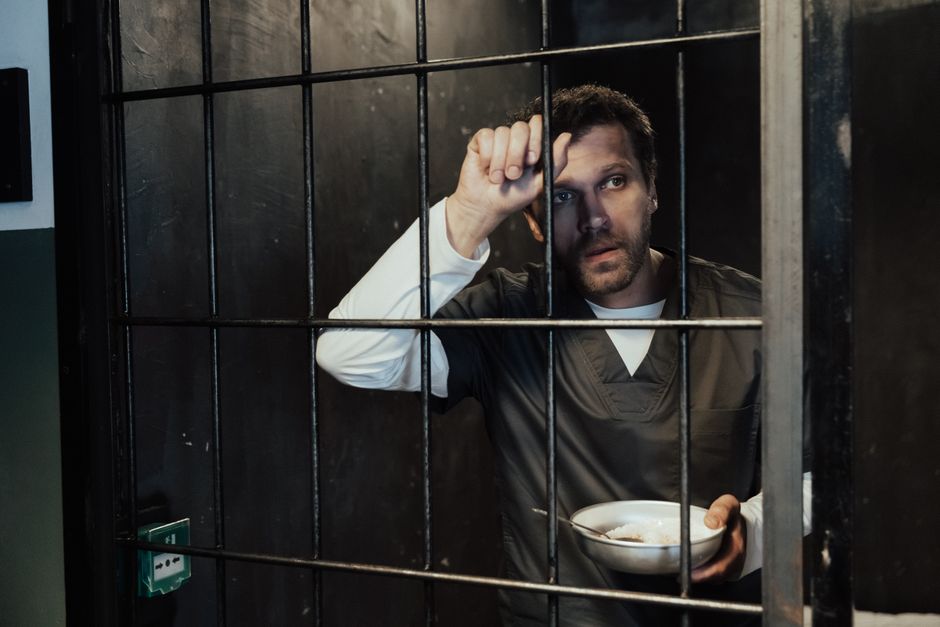
Happy interrupts, and Hal L. turns his attention to him. The orderly does not raise his voice. He does not blink. He simply says: “Now you will go to sleep, or I will put you to sleep.” He pauses, then adds the kicker with the same lifeless delivery: “Check out the name tag. You’re in my world now, grandma.”
The comedic tension in the scene comes entirely from the whiplash between tone and content. Hal L. speaks as if he is reading instructions from a manual, but the words are pure aggression. The “warm glass of milk” line sets up a nurturing, almost tender expectation, and the “shut-the-hell-up” punchline detonates it. By the time he gets to the threat about sleep, the audience is already off balance. The scene works because Stiller never winks. He plays it like a man who has said these exact words to a hundred other residents and will say them to a hundred more.
Why This Quote Works as a Threat (and a Meme)
The line endures because its structure is airtight. The conditional “or” creates what linguists call a false choice. Hal L. is not offering two options. He is stating what will happen and then clarifying what he will personally do if the first thing does not occur. The listener has no agency. That is what makes it funny in the film and useful as a meme.
The visual component amplifies the effect. On Tenor, the GIF version of the scene isolates Stiller’s face as he delivers the line, and the looping format makes the threat feel endless. The YouTube Shorts variant that tops the current search results uses the angry emoji in its title: “I will put you to sleep 😡.” That single character shifts the tone from deadpan comedy to something closer to genuine menace, which is exactly how people deploy it in group chats and comment sections. Someone posts a bad take, and the reply is the GIF. Someone says they are staying up late, and the reply is the GIF. The quote has become a universal shorthand for shutting things down.
Who Is Hal L.? The Actor and the Character
Ben Stiller filmed his Happy Gilmore cameo in 1995, the same year he directed and starred in The Cable Guy with Jim Carrey. At the time, he was not yet the household name he would become after There’s Something About Mary in 1998 and Meet the Parents in 2000. The role of Hal L. is credited exactly that way on IMDb, with the “L” never explained on screen. No backstory is given. No motivation. The character simply exists, fully formed in his contempt for the elderly and his commitment to enforcing bedtime through intimidation.
That lack of backstory is part of what makes Hal L. so meme-able. The internet loves a character who arrives without context, says something unforgettable, and vanishes. Stiller reportedly improvised parts of the exchange, though the specific lines about the warm glass of milk were in the shooting script. The uniform, the mustache, the name tag: all of it adds up to a portrait of institutional pettiness that anyone who has ever dealt with a petty authority figure recognizes instantly.

Ben Stiller and Adam Sandler: A Comedy Partnership
The Happy Gilmore cameo was not the only time Stiller and Sandler crossed paths. Stiller directed Sandler in a brief cameo for Zoolander in 2001, and Sandler returned the favor by casting Stiller in You Don’t Mess with the Zohan in 2008. The two share a comedic instinct for playing absurd rage with a straight face. Sandler’s Happy Gilmore screams at golf balls and fights Bob Barker. Stiller’s Hal L. threatens the elderly in a whisper. Both approaches work because the characters believe completely in their own logic.
In 2026, with Happy Gilmore 2 finally in release, fans are combing through every frame of the original for clues about who might return. Stiller has been characteristically cagey about whether Hal L. will appear in the sequel, but the quote’s resurgence suggests the audience has already made up its mind about what it wants to see.
The 2026 Revival: *Happy Gilmore 2* and the Quote’s Second Life
The original Happy Gilmore turned 25 in 2021, and Facebook posts celebrating the anniversary gave the Hal L. scene a fresh round of attention. But the real spike in 2026 is driven by the sequel. Instagram Reels and TikTok edits pairing the quote with footage from the new film have pulled the line back into heavy rotation. Nostalgia marketing is a powerful engine, and few lines from the original are as instantly recognizable as this one.
Meme culture is also cyclical. A quote that was funny in 1996 becomes a reaction GIF in 2016 and then a full-blown trend again when a sequel drops. The difference in 2026 is the platforms. YouTube Shorts and TikTok reward short, looping, high-impact clips, and the Hal L. scene is essentially a perfect Shorts video waiting to happen. It is under 30 seconds, it has a clear setup and punchline, and it ends on a face that begs to be screenshotted.
If the Happy Gilmore 2 marketing team is paying attention, the quote will appear somewhere in the promotional material. A teaser trailer that opens with Stiller’s voice saying “You will go to sleep” would generate exactly the kind of instant recognition that studios pay millions to manufacture.
From Comedy to Coping: The Strange Case of the “Prayer” Variant
The most unexpected corner of this meme’s evolution appears on TikTok, where at least one creator has appended a full prayer to the quote. The text overlay reads something like: “You will go to sleep, or I will put you to sleep. Fill me with Your peace, Lord, and quiet my mind.” The juxtaposition is jarring. A line written as a comedic threat is being repurposed as a calming invocation.
This is not as random as it first appears. The internet has a long history of taking aggressive or absurd quotes and softening them through recontextualization. The prayer variant acknowledges the original’s surface meaning, the command to sleep, while stripping away the menace and replacing it with something meditative. The user is essentially saying: I want to sleep, but I do not want it to feel like a threat.
That distinction matters. Forced sleep, the kind Hal L. demands, is physiologically impossible. You cannot threaten a brain into delta wave activity. The prayer variant, however unintentionally, gets at something Performance Sleep Systems emphasizes in every product design: restorative sleep requires the right conditions, not the right threats. A cool mattress, proper spinal alignment, and a dark room do what intimidation never can.
The “Angry” Variant and the Emoji Effect
The YouTube Shorts title that leads the current search results uses the angry emoji with intention. “I will put you to sleep 😡” reads less like a joke and more like a warning. In online arguments, this variant functions as a conversation ender. It says: you are exhausting me, and I am done with you. The emoji removes the comedic buffer that the original scene provides. Without Stiller’s mustache and the absurdity of the nursing home setting, the line lands differently. It is a small shift, but it explains why the quote has legs in both comedy spaces and conflict spaces.
The Science of “Being Put to Sleep”: Why Forced Rest Never Works
Here is where the meme collides with reality. Sleep onset is not a switch. It is a gradual neurochemical process involving adenosine buildup, melatonin release, and a drop in core body temperature. The brain transitions through stages, from wakefulness to light sleep to deep sleep and REM, and that transition cannot be rushed by external pressure. In fact, performance anxiety around sleep, the feeling that you must fall asleep right now, is a reliable trigger for insomnia.
Hal L.’s method, threatening someone into submission, would activate the sympathetic nervous system. Heart rate would spike. Cortisol would surge. The exact opposite of what a body needs to drift off. The quote is funny precisely because it is so wildly counterproductive. No one in the history of rest has ever been bullied into a good night’s sleep.
Performance Sleep Systems takes the opposite approach. The goal is to create an environment where sleep feels inevitable, not mandatory. Temperature regulation, pressure relief, and motion isolation are not exciting topics compared to a Ben Stiller cameo, but they are the actual mechanics of quality rest. The brand’s adjustable bases and hybrid mattresses are built around the idea that sleep is a choice you make with your environment, not a demand you make with your voice.
So consider this a playful caution: do not let your sleep be a threat. Make it a choice. Hal L. can keep his warm glass of shut-the-hell-up. You need a mattress that does the work for you.
How to Use the *Happy Gilmore* Meme (Without Actually Threatening Someone)
If you want to deploy the quote in your own digital life, the options are plentiful and the etiquette is straightforward. The GIF is available on Tenor and integrates directly into most messaging apps through the GIF keyboard. Search “Happy Gilmore sleep” or “Hal L.” and it will surface immediately.
For text messages, the quote works best as a response to someone announcing they are staying up too late. A friend texts “I’m pulling an all-nighter,” and you reply with the GIF. The humor relies on shared recognition. If the recipient has not seen Happy Gilmore, the bit falls flat, so know your audience.
On Instagram Reels and TikTok, the audio clip is widely available for remixing. Creators in 2026 are pairing it with footage of pets refusing to settle down, babies fighting naps, and partners scrolling on their phones at 2 a.m. The caption formula is simple: state the behavior, then drop the quote. “My cat at 4 a.m.: You will go to sleep, or I will put you to sleep.”
On Reddit, the quote appears most often in threads about terrible bosses, petty authority figures, and anyone abusing a tiny amount of power. It is a shorthand for the kind of person who confuses control with competence.
The key to using the meme well is tone. The original scene is funny because Hal L. is clearly the villain. When you share the quote, you are borrowing that villainy for a moment of playful aggression. Everyone involved should understand that you are referencing a comedy, not issuing a genuine threat. If there is any doubt, add the angry emoji. It signals that you are in on the joke.