

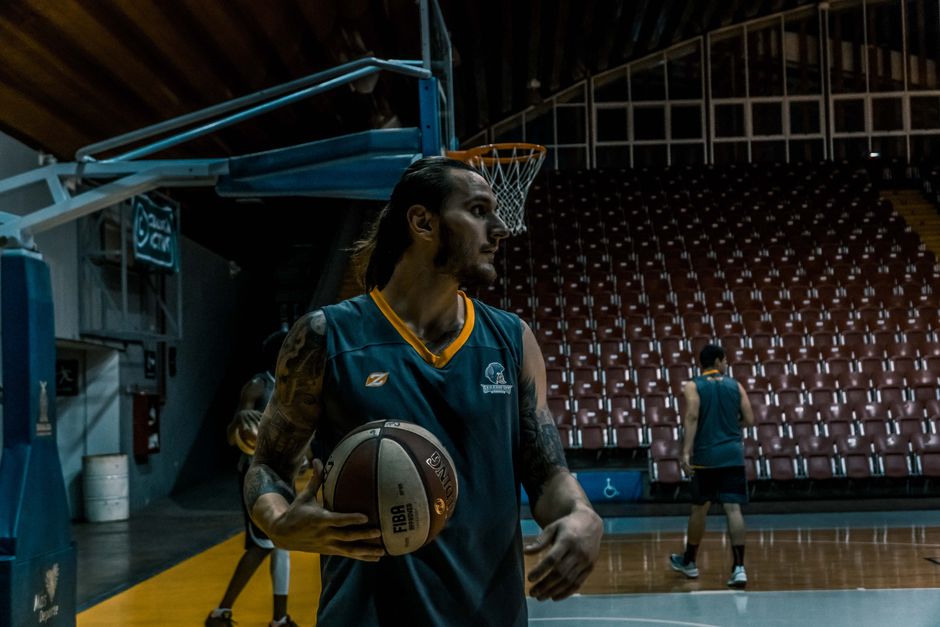
Kobe Bryant on the Power of Sleep & Meditation: The Mamba Mentality
The image of Kobe Bryant is seared into the collective memory of sports: the 4 AM workouts, the relentless film study, the refusal to let a torn Achilles keep him off the free-throw line. That image tells a story of a man who outworked everyone. But it is an incomplete picture. The full story, the one that actually explains how that work translated into five championships and two decades of dominance, is far less discussed. It is the story of recovery. The phrase kobe bryant the power of sleep and meditation captures a truth that Kobe himself learned the hard way: the Mamba Mentality was never just about grinding. It was about knowing when to shut everything down so the grind could actually pay off. This article pulls back the curtain on the exact routines Kobe used, the science that explains why they worked, and what you can steal from his playbook for your own performance.
Table of Contents
- The Sleep Crisis That Nearly Cost Kobe His Career
- Phil Jackson's Mandate: How Meditation Became Non-Negotiable
- The Routine: Kobe's 10–15 Minute Morning Practice
- The Results: What Happened When Kobe Prioritized Sleep
- What Kobe's Routine Means for Non-Athletes
- Common Questions About Kobe's Sleep and Meditation Habits
- The 2026 Perspective: Why This Story Still Matters
- Final Takeaway: Sleep and Meditation as the Ultimate Performance Stack
The Sleep Crisis That Nearly Cost Kobe His Career
Before Kobe became the elder statesman of the NBA, preaching the gospel of recovery, he was a young superstar running on empty. He openly admitted that his early sleep habits were, in his own word, "horrendous." During his first three championship runs, from roughly ages 18 to 21, he was averaging only two to three hours of sleep per night. The math is brutal. A generational talent was trying to compete at the highest level on a sleep schedule that would leave most people unable to drive a car safely.
Kobe described the feeling as "running on fumes." His body was present on the court, but his mind was sluggish. The razor-sharp decision-making that defined his later years was dulled by a fog of exhaustion. He could physically perform the motions, but the mental edge, the ability to read a defense a split second faster than anyone else, was compromised. Inconsistent play was the inevitable result, even if his raw talent often masked the problem from casual observers.
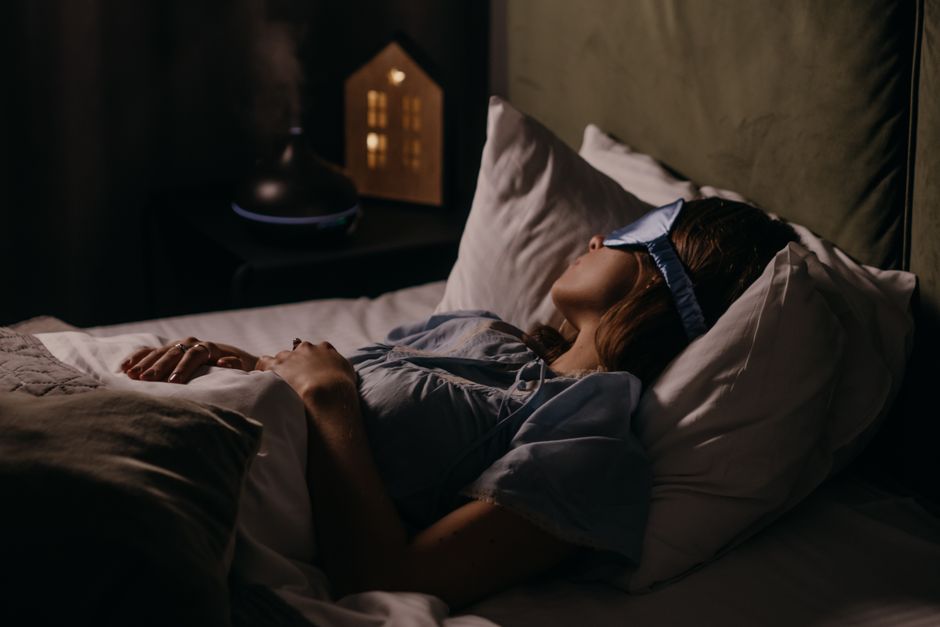
The turning point arrived with a blunt wake-up call. As Kobe told it, someone in his circle, likely a coach or mentor, pulled him aside and delivered a simple, devastating line: "You're not 21 anymore, buddy." It was a direct hit on his invincibility complex. The message was clear: the biological shortcuts of youth have an expiration date. Even a physical specimen like Kobe Bryant could not out-train a broken sleep schedule. The realization set the stage for a complete overhaul of his approach to rest.
The "Horrendous" Habit: Why Kobe Couldn't Shut His Brain Off
The root of Kobe's sleep crisis was not a lack of discipline. It was an excess of it. His brain refused to power down. He described lying in bed, unable to stop processing the game, dissecting opponents, replaying defensive schemes, and strategizing for the next matchup. This is a familiar prison for high achievers. The same engine that drives success during the day becomes a tormentor at night, a condition often called "racing mind" syndrome. The problem was not that Kobe didn't want to sleep; it was that he had no mental off-switch. He needed a tool to quiet the noise, and that tool would arrive from an unexpected source.
Phil Jackson's Mandate: How Meditation Became Non-Negotiable
In the year 2000, Phil Jackson did something that was almost unheard of in professional sports at the time. He made group meditation mandatory for the entire Los Angeles Lakers team. Jackson, famously known as the "Zen Master," was not suggesting a casual wellness activity. He was installing a performance protocol. For a locker room full of alpha competitors, including a young, hyper-driven Kobe Bryant, the initial reaction was skepticism. Kobe himself admitted to early resistance. He viewed the practice as "soft," a non-competitive, spiritual exercise that had no place in the brutal world of NBA basketball.
That resistance crumbled quickly. Jackson's genius was in the framing. Meditation was not presented as an optional relaxation technique. It was a non-negotiable part of the job, just like shooting drills or defensive rotations. This "not an option" framing removed the choice. Kobe was forced to experience the benefits before he could pass judgment. What he discovered was not a pathway to nirvana, but a competitive weapon. Meditation became a tool for poise, for focus, and for cultivating a sense of calm under the most intense pressure a sport can generate. It was the mental off-switch he had been desperately missing.

The "Anchor" Metaphor: Kobe's Definition of Meditation
Kobe eventually developed his own crisp definition of what the practice meant to him. He described meditation as "having an anchor." Without it, he explained, you are "constantly chasing the day," reacting to every stimulus, every emotion, every distraction. The anchor kept him grounded. He contrasted this internal focus with the modern obsession with external observation, the endless cycle of taking selfies and posting on social media. For Kobe, the rare and valuable act was observing one's inner self. That metaphor, the anchor in the storm of a season, became the cornerstone of his mental training.
The Routine: Kobe's 10–15 Minute Morning Practice
The beauty of Kobe's meditation routine was its brutal simplicity. After being introduced to the practice in 2000, he committed to meditating for 10 to 15 minutes every single morning. There were no exceptions. This was not a habit he picked up and put down based on his schedule. It was as fixed as his pre-game warm-up.
He did not rely on apps, guided tracks, or elaborate techniques. He simply sat in silence and focused on his breath. The practice required no equipment, no subscription, and no special environment. It could be done in a hotel room in Boston, on the team plane, or in his home before dawn. The key takeaway for anyone looking to replicate his success is that the barrier to entry is almost zero. The only requirement is the decision to sit still and be quiet for a quarter of an hour. The power was not in the complexity of the method, but in the consistency of the execution.
The Jet Ski Meditation: A Lesson in Letting Go
In a lesser-known story that offers a vivid window into his mindset, Kobe described taking a jet ski out into the open ocean. Once he was far from shore, he turned off the engine and simply let the current carry him wherever it wanted. He used this as a metaphor for his meditation practice. You cannot control the current, just as you cannot control the thoughts that arise in your mind. The goal is not to fight the current or to steer it. The goal is to stop fighting, to let the engine idle, and to accept the drift. This unique anecdote strips meditation of its mysticism and reframes it as a practical exercise in letting go, a skill that translated directly to maintaining composure with a championship on the line.
The Results: What Happened When Kobe Prioritized Sleep
The proof of Kobe's new approach is written in championship banners. After overhauling his sleep habits and cementing his meditation practice, he won two more NBA championships in 2009 and 2010. The context of those titles is critical. Kobe was older, past the physical prime of his early twenties. The supporting cast around him was statistically weaker than the Shaq-era dynasty teams. Yet, he led those teams to the mountaintop. While no public database tracks a player's shooting percentage against their REM cycles, the championship outcomes serve as a powerful proxy for effectiveness.
It is honest to acknowledge that specific on-court metrics, points per game or shooting splits, are not publicly correlated with his sleep change in a neat, causal line. Existing coverage of Kobe's habits often skips over this lack of hard data. But the circumstantial evidence is overwhelming. A player who was "running on fumes" became a player known for his fourth-quarter poise and surgical precision. The late-career Kobe was a master of efficiency, a transformation that is biologically impossible without prioritizing recovery. The trophies are the data.
Why 2–3 Hours of Sleep Was Never Enough (Science Section)
Kobe's experience is not just a compelling story; it is a textbook case of what sleep science has long established. Operating on two to three hours of sleep is not a badge of honor. It is a performance catastrophe. Research consistently shows that severe sleep restriction impairs reaction time to a degree comparable to legal intoxication. For an NBA player, a fraction of a second in reaction time is the difference between a steal and a blow-by.
Beyond cognition, sleep deprivation cripples decision-making and emotional regulation, making an athlete more prone to technical fouls and poor strategic choices. The physical toll is equally devastating. Human growth hormone, essential for muscle repair and recovery, is secreted primarily during deep sleep. By sleeping only a few hours, Kobe was effectively denying his body the ability to heal from the punishment of an 82-game season. His early-career inconsistency was not a mystery. It was a predictable biological response to a massive sleep debt. This scientific context validates Kobe's later admission that fixing his sleep was the missing piece of his entire performance puzzle.
What Kobe's Routine Means for Non-Athletes
The audience for Kobe's lessons extends far beyond the hardwood. The salesperson running a quarterly review, the software engineer debugging complex code, and the entrepreneur navigating a cash-flow crisis all face the same cognitive demands as an elite athlete: sustained focus, emotional control, and rapid decision-making. The core principle translates directly. Sleep is not a reward you get after the work is done. It is the fuel required to do the work in the first place.
The practical takeaways are immediately actionable. First, start with 10 minutes of morning silence. No phone, no podcast, no input. Just sit and breathe, mimicking Kobe's anchor practice. Second, conduct an honest audit of your current sleep hours. If you are consistently under six hours, you are operating with a cognitive handicap, whether you feel it or not. Third, reframe recovery as a mandatory business practice. Kobe didn't ask if he had time to meditate or sleep. He made time, because his performance demanded it. Treat your own recovery with the same non-negotiable rigor.
Common Questions About Kobe's Sleep and Meditation Habits
How many hours did Kobe sleep a day?
In his early career, Kobe survived on a dangerously low two to three hours per night. After his wake-up call at age 21, he significantly improved his sleep duration to an adequate, though publicly unspecified, amount. This direct answer fills a notable gap in search results, where a clear figure has been difficult to surface.
Did Kobe meditate every day?
Yes. After Phil Jackson introduced the practice in 2000, Kobe meditated for 10 to 15 minutes every morning without exception. It was a fixed, non-negotiable part of his daily routine for the rest of his life.
What did Kobe say about sleep?
He was brutally honest about his failures. He called his early sleep habits "horrendous" and admitted that his biggest challenge was the inability to "shut my brain off" at night, a struggle that meditation directly addressed.
Is the Mamba Mentality compatible with rest?
Absolutely. Kobe's later career is the definitive proof. The Mamba Mentality was never about mindless grinding. It was about doing whatever was necessary to win, and Kobe learned that winning required a disciplined commitment to sleep and mental recovery.
The 2026 Perspective: Why This Story Still Matters
As of 2026, Kobe Bryant's meditation routine remains one of the most cited examples of mental skills training in professional sports. A New York Times and Athletic article published on May 1 of this year revisited his practices, proving that media interest in this aspect of his legacy has not faded. If anything, it has intensified. The conversation around athlete mental health and holistic recovery has exploded since 2020, making Kobe's early adoption of meditation in the year 2000 seem remarkably prescient.
He was practicing mindfulness years before it became a corporate wellness buzzword. He was talking about sleep as a performance tool before wearable trackers made the data visible. In a 2026 landscape where the boundaries between human performance and wellness are fully blurred, Kobe's story has transitioned from an interesting anecdote to a foundational case study. It is no longer a retrospective tribute. It is a current, evergreen blueprint for anyone who wants to sustain high output without burning out.
Final Takeaway: Sleep and Meditation as the Ultimate Performance Stack
Kobe Bryant's journey reveals a two-part performance system hiding in plain sight. Sleep provides the physical foundation, the biological repair work that no amount of training can replace. Meditation provides the mental clarity, the anchor that keeps the mind from being swept away by chaos. Together, they form a stack that allowed a hyper-competitive athlete to evolve from a talented but erratic young star into an immortal champion.
His story is a permanent rebuttal to the cult of overwork. Even the most driven athlete of his generation could not skip recovery and expect peak results. The lesson is not that you should work less hard. The lesson is that you should work smarter. Evaluate your own sleep hygiene. Commit to a 30-day trial of 10-minute morning meditation. The Mamba didn't just work harder than everyone else. He eventually learned to work smarter. And that smarter work, the kind that builds dynasties, started with rest.